
Workplace safety
Emergency and Evacuation Plan: What It Is, What It Does and Why It Has to Work
An emergency and evacuation plan should help people and organisations know what to do when an emergency occurs. Find out what it should include and how training, drills and technology can make it more effective.
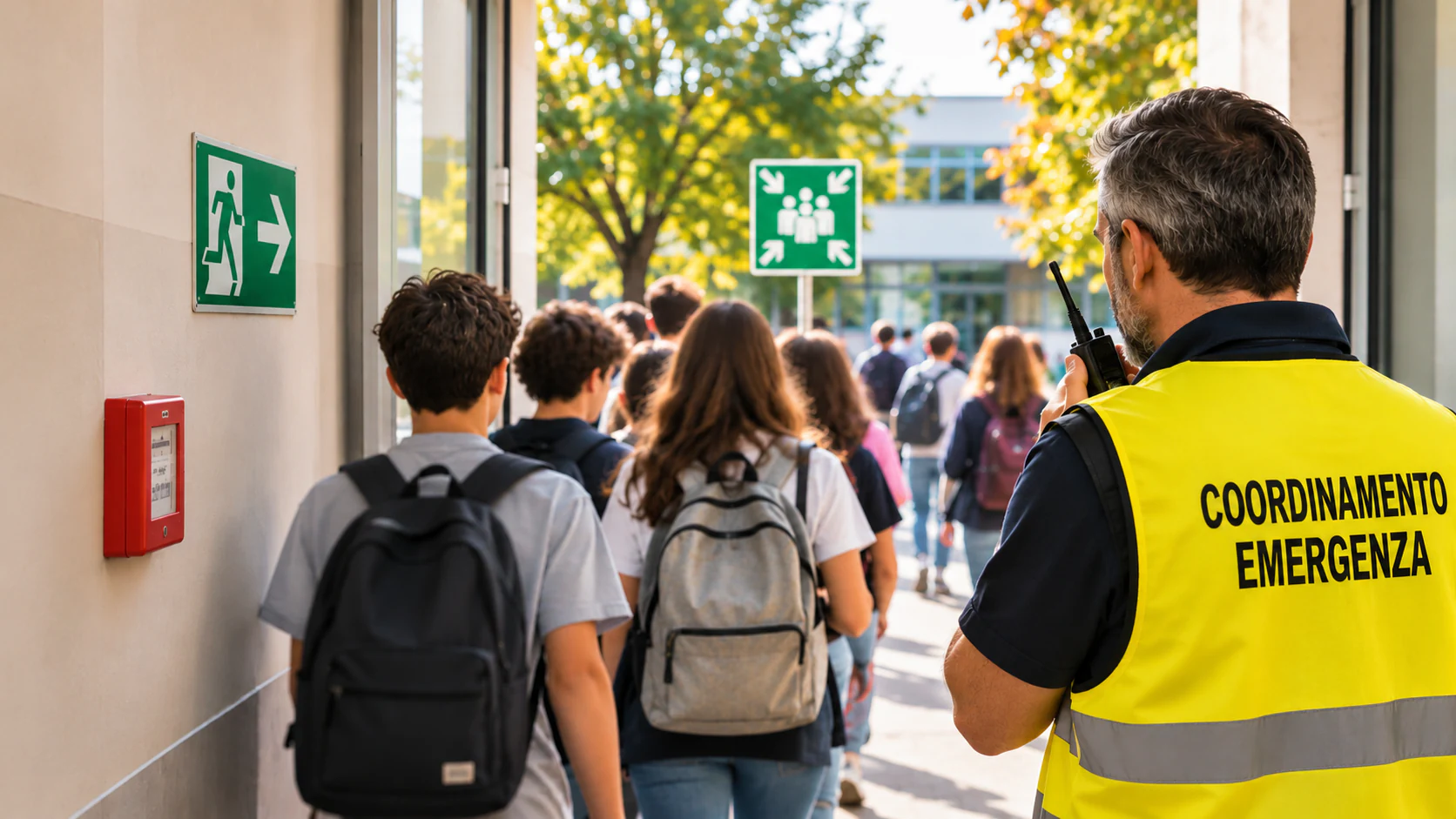
Bomb threats affecting numerous schools across Italy have brought renewed attention to an issue that is too often taken for granted: how to manage an emergency in practice.
In situations like these, schools and organisations that appear similar may respond differently. Some evacuate, while others take different measures based on instructions from the relevant authorities, the circumstances and the layout of their buildings.
That alone does not mean anyone made a mistake. Regulations, official protocols and general procedures provide guidance, but each site has its own conditions: building layouts, escape routes, the number of occupants, people who may need additional assistance, staffing arrangements and ways of coordinating the response.
This is where an emergency and evacuation plan comes in.
What is an emergency and evacuation plan?
An emergency and evacuation plan sets out how a facility, business, school or other organisation will respond to emergencies in an organised way.
As well as identifying emergency exits, escape routes and assembly points, the plan should make clear:
- who does what during an emergency;
- how emergency communications are initiated;
- what people should do;
- how to coordinate an evacuation if one is needed;
- how to manage different risk scenarios;
- how to liaise with the relevant authorities.
Documenting compliance is only part of its purpose. Above all, the plan should help people manage a real emergency.
Why the plan needs to be put into practice
A common mistake is to treat the plan as a document to prepare, file and produce during an inspection.
An emergency and evacuation plan loses much of its value if the people expected to use it are unfamiliar with it. It works when it becomes part of how the organisation operates.
The people involved need to know:
- which procedures to follow;
- who to contact;
- how to receive or pass on information;
- how to respond to different situations;
- which mistakes to avoid under pressure.
This is the difference between safety on paper and safety in practice.
A plan can meet a documentation requirement simply by existing. Its practical value comes from guiding people's actions, decisions and communications during a critical incident.
What should an emergency and evacuation plan contain?
An effective plan must reflect how the organisation actually works. Any template needs to be adapted to the site and its circumstances.
A good emergency and evacuation plan should generally cover the following areas.
1. Site assessment
Describe the building and its spaces, access points, escape routes, assembly points, relevant systems and main concerns.
2. Relevant emergency scenarios
Identify the scenarios relevant to the organisation, such as a fire, gas leak, earthquake, power cut, medical emergency or external threat, including reports of an explosive device.
Procedures should reflect the nature of the incident and guidance from the relevant authorities. Whether to evacuate depends on the situation.
3. Roles and responsibilities
Specify who coordinates the response, assists with evacuation, checks different areas, manages communications and liaises with the emergency services.
4. Operational procedures
Set out the actions people need to take in clear, practical terms. Vague or overly theoretical instructions are difficult to use during an emergency.
5. Communication
The quality of information matters during an emergency. Explain how to raise the alert, update those in charge and communicate with staff and everyone else on site.
6. Assistance for people with additional needs
Plan for people with reduced mobility or temporary or permanent disabilities, children, visitors and anyone else who may need specific assistance.
7. Training and drills
Even a well-written plan can remain theoretical without training and practical drills.
What emergencies in Italian schools show about putting plans into practice
Incidents involving schools in several Italian cities show the importance of treating emergency management as part of day-to-day operations.
This is especially clear in schools, which need to manage buildings and procedures while looking after large, diverse groups that often include children.
Staff need to understand the school's emergency and evacuation plan, share it with those responsible for the response and turn it into procedures people can access and follow.
When an alert comes in, having a plan is only the starting point. Does everyone involved know what to do?
The answer depends on practical questions:
- Are staff familiar with the procedures?
- Have students been prepared?
- Are roles clear?
- Do communications reach people in time?
- Is there an effective way to coordinate the response?
Without answers to these questions, a plan can look sound on paper and still prove fragile in practice.
From safety on paper to safety in practice
Operational safety depends on how effectively the organisation can respond.
A plan works when it:
- reflects real conditions;
- is kept up to date;
- is familiar to the people who need it;
- is supported by training;
- is tested through drills;
- is supported by clear and effective communication tools.
An organisation can have documentation in order and still struggle to respond if people do not know what to do in an emergency.
The role of technology in emergency management
Organisational responsibility, training and coordination with the authorities remain essential. Technology can make procedures easier to access and communication more effective.
Tools that can help include:
- digital procedures people can access quickly;
- instant notifications to those in charge;
- coordinated smartphone communications;
- alert systems connected to wearable devices;
- tools that quickly reach specific people or groups.
WIDIU Alert, currently in development within the daily technology ecosystem, is designed to support communication and alerting. With appropriate configuration and validation, it could help make emergency responses faster, more accessible and better coordinated.
Technology works best when it supports an established process. Its usefulness depends on planning that process first.
Training and drills put the plan to the test
Every emergency and evacuation plan should be supported by briefings, training and drills in line with applicable requirements.
Drills help organisations check whether:
- response times are adequate;
- people understand their roles;
- communications work;
- procedures are realistic;
- there are problems to address.
An untested plan may remain theoretical. Testing and updating it helps the organisation improve its response over time.
An effective emergency plan is simple, clear and practical
Clarity is often underestimated. During an emergency, lengthy, technical or unintuitive procedures can cause confusion.
A good plan should be:
- clear enough to understand;
- consistent with real conditions;
- easy to find and refer to;
- practical enough to guide action;
- kept up to date as the organisation changes.
Conclusion: an emergency and evacuation plan has to work
Writing an emergency and evacuation plan is the first step.
Its value comes from people knowing the plan, having practical procedures and clear roles, communicating effectively and being able to respond when something happens.
It is worth asking more than “Do we have an emergency plan?”
The more important question is “If an emergency happened tomorrow, would people know what to do?”
Having a plan is only the beginning.
It has to work.
Frequently asked questions
What is an emergency and evacuation plan?
It is a document that sets out the roles, procedures, communications and actions needed to manage emergencies in an organised way within a facility.
What should an emergency plan contain?
It should cover the site layout, relevant emergency scenarios, roles and responsibilities, operational procedures, communication, assistance for people with additional needs, and training and drills. The details depend on applicable requirements and local circumstances.
Why is an emergency plan important?
It helps an organisation coordinate its response to critical situations, reducing improvisation, delays and confusion. People need to know the plan and be able to follow it.
Is an emergency and evacuation plan useful in schools?
Yes. It is especially important in schools because it involves staff, students and visitors and requires clear procedures, well-defined roles and timely communication.
Can technology improve emergency management?
Yes, when used appropriately. Digital procedures, notifications to those in charge, smartphone communications and alert systems can help people respond more quickly and effectively. Training, drills and organisational coordination remain essential.
From planning to emergency response
Emergency management relies on clear procedures, effective communication and appropriate tools. See how daily is developing technology to support risk prevention and operational safety.
Explore the daily ecosystem